
We humans are a pretty intelligent species. We have solutions and answers to most of our problems and questions. Yet there are some things for which nobody has any answers. These are called paradoxes.
Here are some of the paradoxes that would totally twist your brains.
1. The Bootstrap paradox/ Time traveler’s paradox

It is a paradox that would occur if we could time-travel. It talks about the confusion about objects having no origin due to time travel.
Let’s imagine you read a book and now you travel back in time and give the book to the author before he had written it. Now the author simply publishes the book under his own name. So, who actually wrote the book?
For instance, in the film Somewhere in Train, we find an old woman gives a watch to a playwright who later travels back in time and meets the same woman when she was young and gives her the same watch that she will later give to him. So where did the watch come from originally?
2. The Ship of Theseus paradox

It a simple paradox which questions that if you repair and replace all the existing parts of an object then does it remain the same object or becomes a different one.
Suppose there is a ship which is in a scrapyard, now in order to make the ship functional again they replace in each and every part of the ship with a new one.
So, now is it the old ship or a new one?
3. The Grandfather paradox

It is an another paradox that involves time travel. Suppose you could time travel, then can you travel back in time and prevent yourself from being born?
Let’s take an example, a boy wants to prevent himself from being born, so he travels back in time and kills his grandfather before he even met his grandmother, thus erasing his existence. But if he was never born then who killed his grandfather?
4. The God paradox

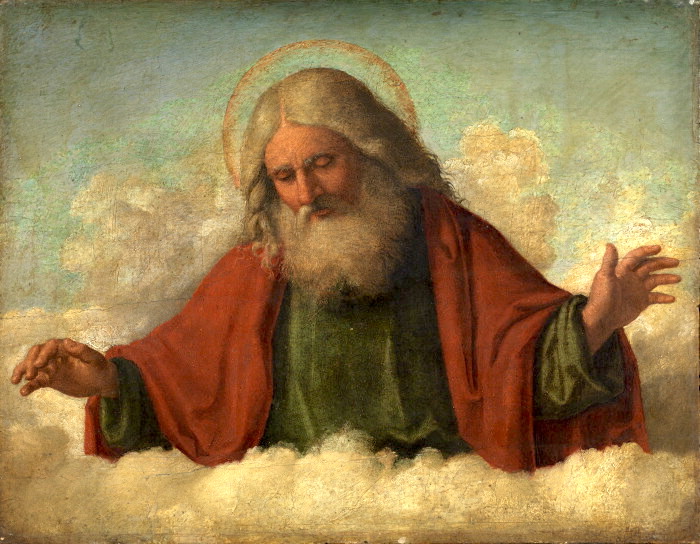
We all know that God is omnipotent and nothing is impossible for him. So, can he can create a stone which he himself cannot lift?
And now if he can lift it then he is not omnipotent as it would mean that he has failed to create such a stone.
5. Lazy Bones paradox

This is one paradox I absolutely love. Let’s say that everything that happens is destined to happen.
So, if I fall sick, should I visit the doctor or should I leave it to destiny to cure me?
6. The Heterological paradox or the Grelling–Nelson paradox

The word heterological means those words which cannot be defined. Like yellow, red etc. So, the paradox is thatcan you define the word heterological?
As it means something that cannot be defined, so if we define it, then it would become a word which can be defined, thus, losing its meaning by gaining its meaning.
7. Liar’s Paradox or the Epimenides’ paradox.

This one roots from Epimenides, an old, Greek philosopher who once made a famous statement “All Cretans are liars.” Ironically, he himself was a creation, so was he lying or telling the truth?
It is same as when a person says, that I lie all the time. So, when he says this, is he lying or telling you the truth?
8. The Buridan’s ass paradox

The Buridan’s ass paradox is a paradox of plenty. It is said that if a donkey is given exactly the same amount of hay on both sides then it will die of hunger because it won’t be able to decide which side should it eat.
The paradox is named after the 14th-century French philosopher Jean Buridan.
9. The Barber’s Paradox

According to this paradox, suppose there is a barber who is the only person who is supposed to shave all the persons who don’t know how to shave.So, who shaves the barber?
10. The Crocodile Paradox

This is another very interesting paradox. The story goes like this, a crocodile takes a young boy with itself, now the mother of the boy pleads with the crocodile to return the boy.
The crocodile tells her that he would return the boy only if she can guess whether it wants to keep the boy or not. But suppose the crocodile intends to keep him and the mother answers correctly, So would he now return the boy or keep him?
11. Olber’s paradox

This paradox is also called the night sky paradox. Olbers’ paradox, named after the German astronomer Heinrich Wilhelm Olbers.
It argues that darkness of the night sky conflicts with the assumption of an infinite and eternal static universe. Thus creating a paradox.
12. The Court paradox

It is said that the famous sophist Protagoras once took on a pupil, Euathlus, on a condition that he will pay his fees after he had won his first case. But his pupil was unable to find a case which he could win.
Protagoras became impatient and accused his pupil of deliberately not winning a case. So, he sued him for in order to receive his fees.
Now the paradox is that if he wins the case the case will he have to pay the money or not?
As according to the original contract he needed to pay the money only after he wins his first case but at the same time, he has also won the case which means he should not pay the amount.
Do you the solutions to these age-old problems?










.jpg)
Post a Comment